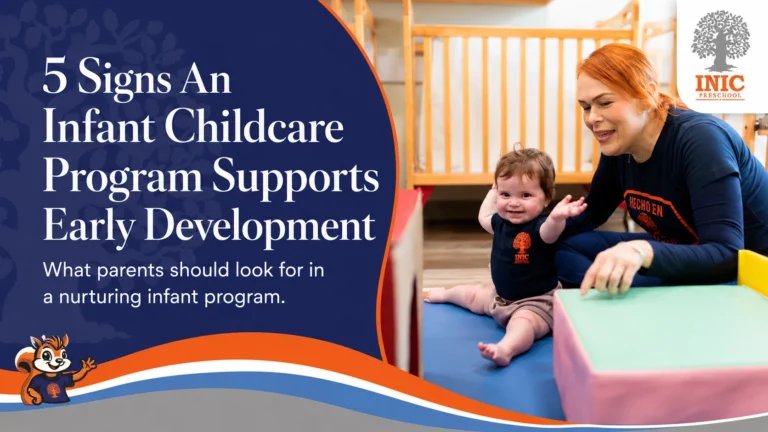
Infant childcare plays an important role in supporting a child’s earliest stages of growth, learning, and emotional development. During the first years of life, babies begin building trust, forming attachments, developing communication skills, and exploring the world through safe, responsive care.
A strong infant childcare program should offer more than basic supervision. It should provide nurturing relationships, age-appropriate learning experiences, consistent routines, and a safe environment where each child can grow at their own pace. For parents, knowing what to look for can make it easier to choose a program that supports healthy early development.
1. Infant Daycare Programs Provide Consistent, Responsive Care
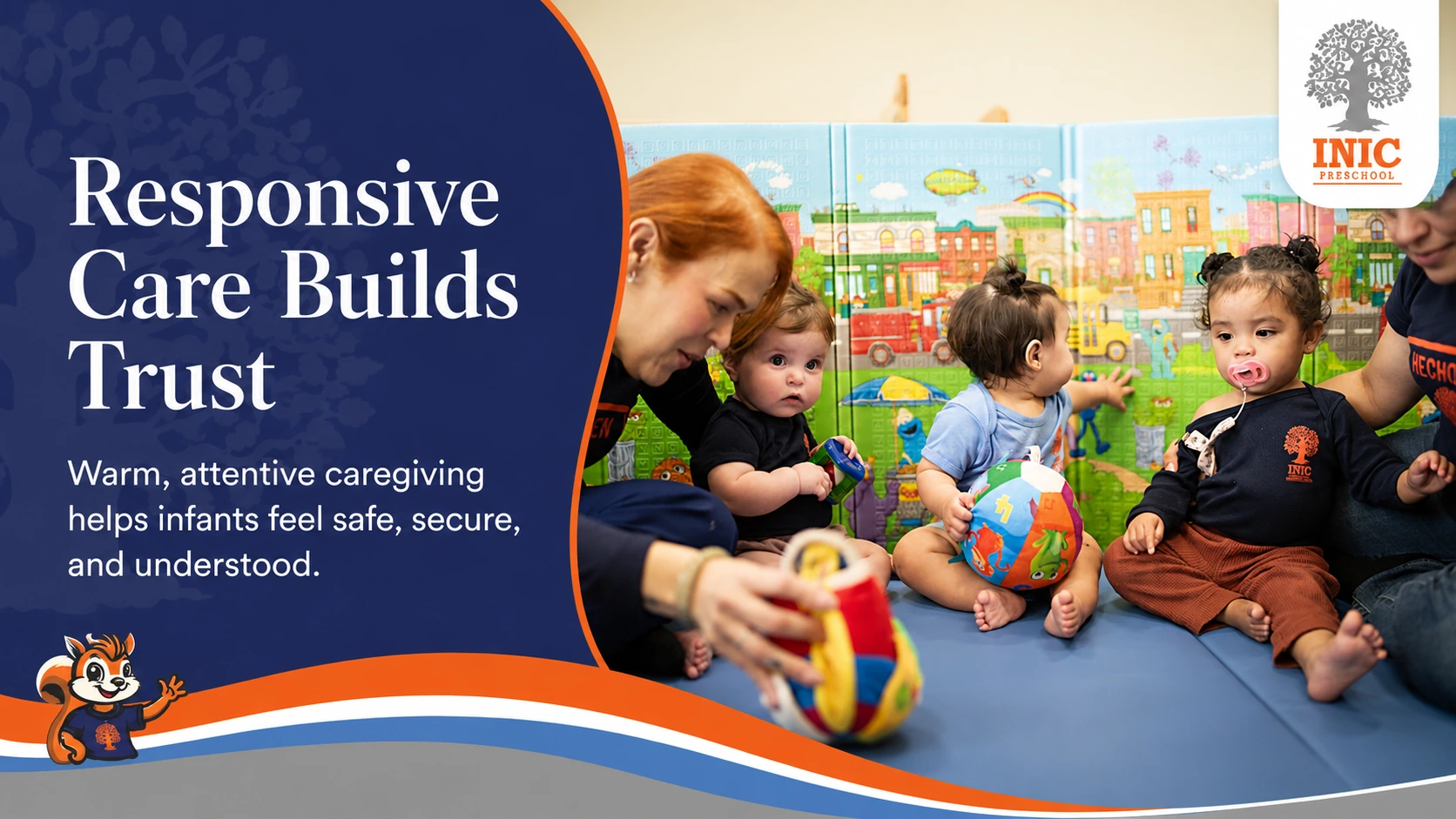
Consistency is one of the most important parts of high-quality infant care. Babies are still learning how to understand the world around them, and predictable care helps them feel safe, secure, and supported. In strong infant daycare programs, teachers respond with warmth, patience, and attentiveness throughout the day.
Responsive care means that caregivers notice each baby’s cues and respond in ways that meet their needs. This may include comforting a crying infant, recognizing when a baby is tired, adjusting feeding support, or encouraging gentle exploration during play. These small moments build trust and help infants develop a sense of emotional security.
A consistent infant care setting should include:
- Predictable routines for feeding, rest, diapering, and play
- Warm interactions that help babies feel comforted and understood
- Attentive supervision during floor time, tummy time, and daily transitions
- Individualized care that respects each child’s schedule and developmental pace
- Clear communication with families about daily needs and progress
When infants receive care from calm, present, and responsive teachers, they begin to form healthy attachments. These early relationships support social-emotional growth and create a foundation for future learning. Babies are more likely to explore, engage, and practice new skills when they feel connected to trusted adults.
For parents, this is an important sign that a program is focused on more than daily care. A strong infant classroom should feel nurturing, organized, and attentive to each child’s individual needs. When consistency and responsiveness are part of every interaction, infants are better supported as they grow through each early milestone.
2. Infant Development Daycare Encourages Age-Appropriate Growth
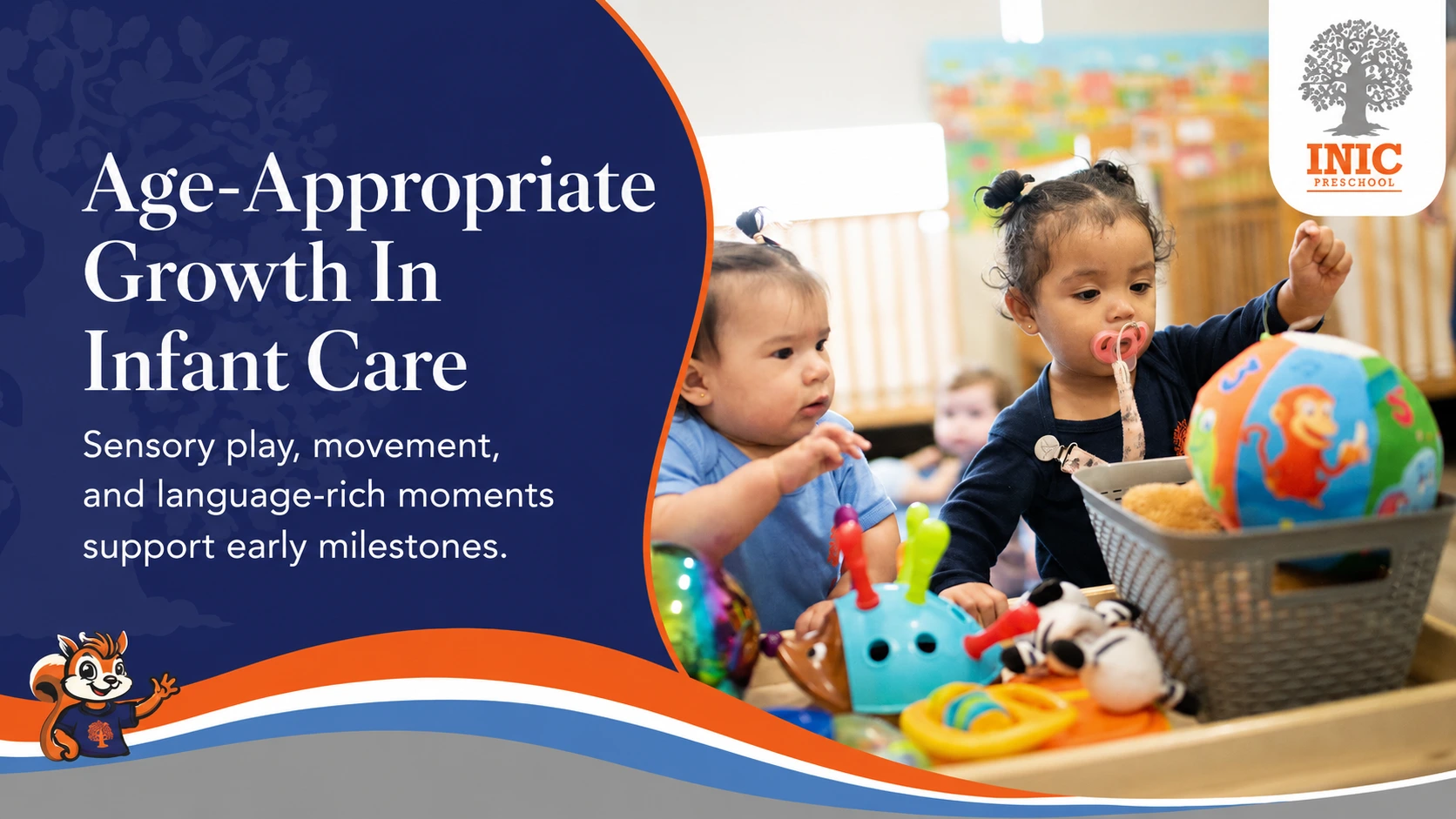
A strong infant development daycare program recognizes that every baby grows at their own pace. During infancy, development happens through simple but meaningful experiences, including movement, sound, touch, facial expressions, and caring interactions. The goal is not to rush milestones, but to create daily opportunities that support each child’s natural progress.
Age-appropriate growth may include physical, cognitive, social, and emotional development. Teachers support these areas by offering activities that match each infant’s stage, comfort level, and readiness. For younger infants, this may include gentle tummy time, soothing communication, soft music, and visual tracking activities. For older infants, it may include reaching for toys, crawling practice, sensory play, early language exposure, and guided exploration.
A development-focused infant program often includes:
- Tummy time and movement activities to support strength and coordination
- Responsive language exposure through talking, singing, and reading
- Sensory experiences that encourage curiosity and early discovery
- Safe exploration that allows babies to practice new skills
- Milestone awareness without pressure or comparison
Teachers play an important role in observing each baby’s progress. By noticing small changes, such as improved head control, stronger grasping, increased babbling, or interest in social interaction, caregivers can adjust daily experiences to support the child’s next stage of development.
Parents should look for a program where learning feels gentle, intentional, and developmentally appropriate. Infants should have time to rest, bond, move, observe, and explore in ways that feel natural. When a daycare program understands infant development, each part of the day becomes an opportunity for growth. Through patient guidance and thoughtful care, babies can build confidence, strengthen early skills, and feel supported as they reach important developmental milestones.
3. An Infant Early Learning Environment Feels Safe, Calm, And Nurturing
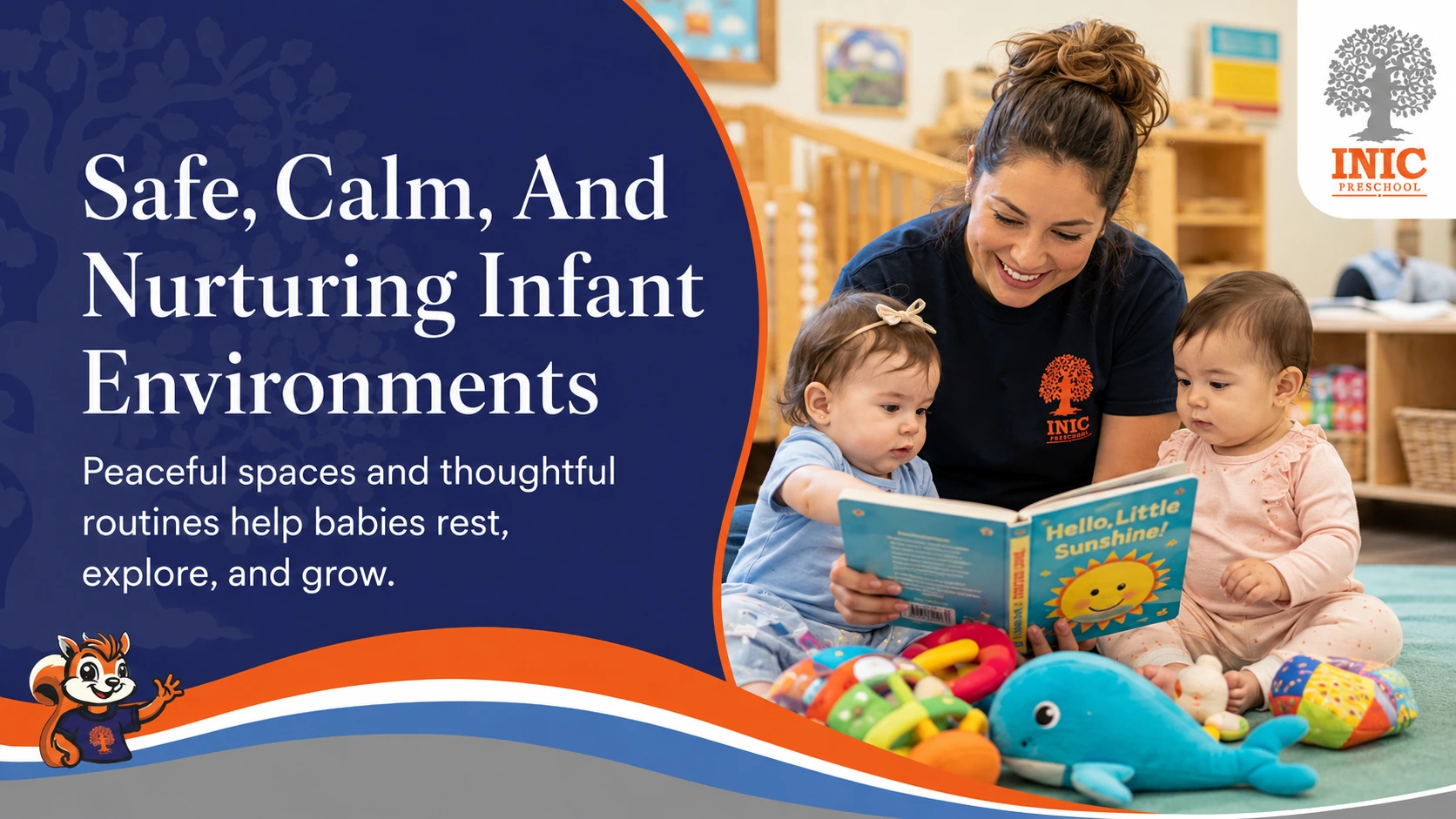
An infant’s early learning environment should feel peaceful, organized, and designed with babies’ needs in mind. Infants learn through their senses, relationships, and daily experiences, so the classroom setting plays an important role in how they feel, explore, and grow. A calm space helps babies feel secure, while a thoughtfully prepared environment gives them safe opportunities to observe, move, and discover.
In a high-quality infant classroom, every part of the environment should support comfort and development. Soft spaces for floor time, age-appropriate toys, clear supervision, and gentle transitions all help create a setting where infants can learn naturally. The room should not feel overstimulating or crowded. Instead, it should provide a balance of rest, connection, and exploration.
Parents may notice signs of a nurturing infant environment, such as:
- Clean, safe spaces where babies can move and explore with confidence
- Soft lighting and calm sounds that support comfort and rest
- Age-appropriate materials that encourage reaching, grasping, crawling, and sensory discovery
- Consistent routines that help infants understand what comes next
- Warm teacher presence that makes the classroom feel secure and welcoming
A strong early learning environment also respects each baby’s individual rhythm. Some infants may need more rest, while others may be ready for longer periods of play and interaction. Teachers should adjust the environment and daily flow to support each child’s needs.
When infants feel safe and comfortable, they are more likely to engage with the world around them. They begin to build trust, strengthen early skills, and develop confidence through everyday moments. A nurturing environment gives babies the foundation they need to explore, connect, and grow healthily.
4. Teachers Build Strong Relationships With Families
Strong family partnerships are an important sign of a supportive infant childcare program. Babies benefit when teachers and parents work together to understand each child’s routines, preferences, milestones, and needs. Since infants cannot fully express what they feel or need, clear communication between home and school helps create consistency throughout the day.
Teachers should take time to learn each baby’s unique schedule, including feeding patterns, sleep needs, comfort preferences, and developmental progress. This helps caregivers provide care that feels familiar and reassuring. It also allows parents to feel informed and confident about their child’s experience.
A strong family partnership may include:
- Daily updates about meals, naps, diaper changes, and activities
- Consistent communication about milestones, routines, and concerns
- Respect for family preferences related to comfort, feeding, and care
- Collaborative support when babies experience transitions or changes
- A welcoming approach that helps parents feel heard and valued
When teachers communicate clearly, parents gain a better understanding of how their baby is growing in the classroom. They can see patterns, celebrate progress, and feel reassured that their child is receiving attentive care. This connection also helps teachers respond more effectively, as they gain insight into what is happening at home.
Families should feel comfortable asking questions and sharing updates. Whether a baby is adjusting to a new sleep schedule, trying new foods, or reaching a new milestone, open communication helps everyone support the child with consistency.
When teachers build trusting relationships with families, infant care becomes more personal and responsive. This partnership creates a stronger foundation for the child’s emotional security, early learning, and overall development.
4. The Program Prioritizes Health, Safety, And Trust
Health and safety are essential in any infant childcare setting. Babies need an environment where they are carefully supervised, protected, and cared for with consistent routines that support their well-being. A strong program should make parents feel confident that every part of the day is handled with attention, cleanliness, and care.
Infants depend on adults for every need, so safety should be visible in both the classroom setup and daily practices. This includes safe sleep procedures, clean play areas, secure entry systems, proper sanitation, and careful supervision during feeding, diapering, rest, and play.
Parents can look for signs such as:
- Clean classrooms and materials that are regularly sanitized
- Safe sleep practices that follow infant care guidelines
- Careful supervision during every part of the day
- Secure spaces that limit access to authorized adults
- Clear health policies for illness, hygiene, and daily care
A trustworthy program also communicates openly with families. Parents should understand how the center handles safety procedures, health updates, emergencies, and daily routines. This level of transparency helps families feel informed and reassured.
Trust is built through consistent actions. When teachers follow safety practices, communicate clearly, and care for each baby with patience and respect, families can feel more confident in their choice. A program that prioritizes health and safety creates a strong foundation for comfort, development, and peace of mind. For infants, this means they can grow in a setting where their basic needs are protected, and their emotional security is supported each day.
Conclusion
The right infant childcare program should give families confidence that their baby is cared for with patience, intention, and respect. From responsive teachers and age-appropriate learning to a safe classroom environment and strong family communication, each part of the program should support healthy early development. During infancy, every caring interaction matters. When babies feel secure, understood, and encouraged, they can begin building the emotional, social, and physical foundations that support future learning.
Schedule a visit today to learn more about INIC’s infant childcare program: https://inic-edu.com/contact-us/.