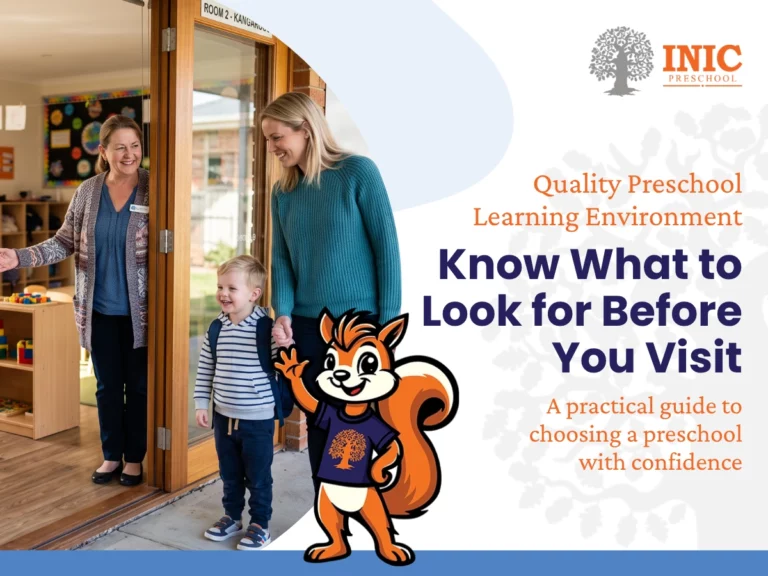
A quality preschool learning environment should support children’s safety, confidence, curiosity, and overall development from the moment they enter the setting. Before scheduling a tour, parents can look for clear signs that a preschool provides thoughtful care and meaningful early learning experiences.
These may include qualified educators, well-organized classrooms, age-appropriate resources, positive staff interactions, and a curriculum that balances structure with play. The atmosphere should feel welcoming, calm, and designed around the needs of young children. By reviewing these key features in advance, families can make more informed decisions and identify preschools that align with their values, expectations, and child’s individual needs.
Evaluate the Preschool Classroom Environment
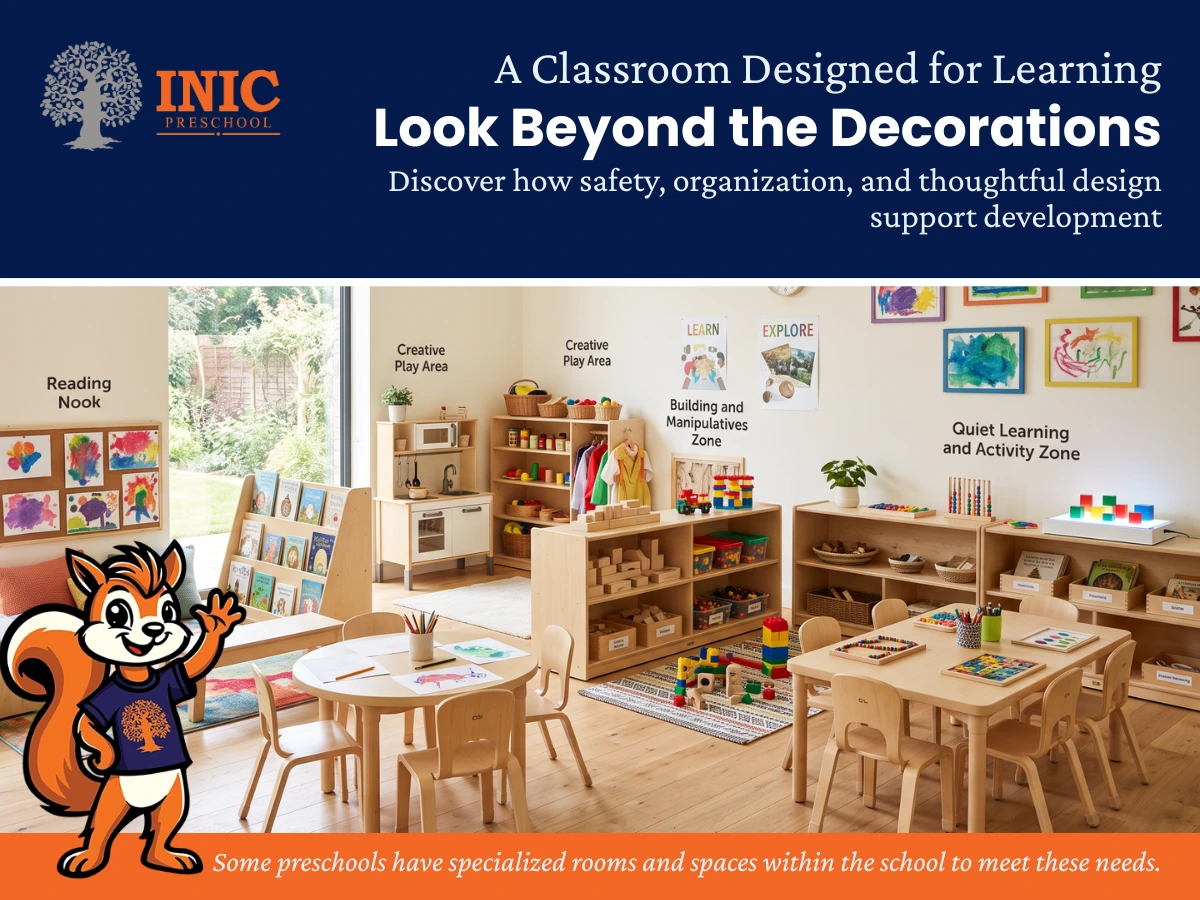
The preschool classroom environment can reveal a great deal about how children are supported throughout the day. A well-designed space should feel safe, organized, welcoming, and appropriate for the children’s ages and developmental stages. Parents should look beyond decoration and consider whether the classroom encourages learning, movement, creativity, and independence.
Look for Safety, Cleanliness, and Organization
A quality classroom should be clean, well maintained, and arranged to reduce unnecessary hazards. Furniture should be age-appropriatechild-sized, materials should be stored securely, and walkways should remain clear. Safety procedures should also be visible through features such as secured entry points, appropriate supervision, and clearly maintained learning areas.
Organization is equally important. When toys, books, and learning materials have designated places, children can make choices more confidently and participate in cleanup routines. This structure supports independence while helping the classroom remain calm and functional.
Review the Classroom Layout
The classroom should include distinct areas for different types of learning and play. These may include:
- A reading and language area
- Spaces for art and creative expression
- Blocks, puzzles, and early math materials
- Dramatic play areas
- Quiet spaces for rest or individual activities
- Open areas for movement and group learning
Each area should be easy for children to access and designed to support purposeful exploration. Some preschools have specialized rooms and spaces within the school to meet these needs.
Check the Quality of Learning Materials
Materials should be age-appropriate, engaging, and available in sufficient variety. Look for books, sensory materials, manipulatives, art supplies, and open-ended toys that allow children to think creatively and solve problems. A strong preschool classroom does not rely only on worksheets or highly structured activities.
Consider the Overall Atmosphere
The room should feel active without being chaotic. Displays should reflect children’s work, classroom learning, and diverse families or cultures. Most importantly, the environment should make children feel comfortable, valued, and ready to participate in meaningful learning experiences.
Prepare Questions to Ask a Preschool Before Scheduling a Tour
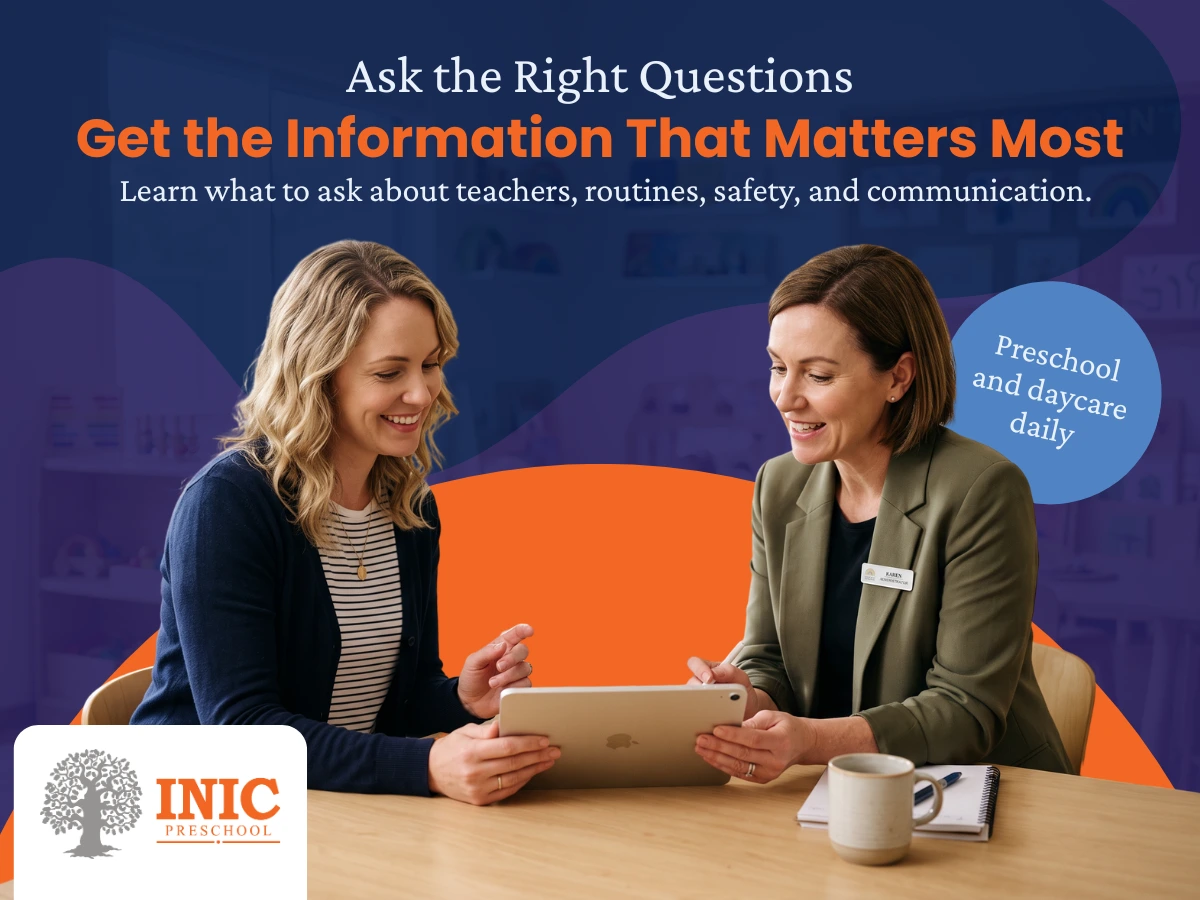
Preparing questions to ask a preschool before scheduling a tour can help families determine whether a program is likely to meet their child’s needs. A preschool’s website, enrollment materials, and initial communications should provide clear information, but parents may still need additional details before deciding which schools to visit.
Ask About the Curriculum and Daily Routine
Parents should begin by learning how the school structures each day. A balanced preschool and daycare daily schedule should include opportunities for play, teacher-guided learning, movement, outdoor time, meals, rest, and creative activities.
Helpful questions may include:
- What curriculum or educational framework does the preschool follow?
- How are activities adapted for different ages and abilities?
- How much time do children spend learning through play?
- What does a typical classroom schedule include?
These questions can help parents understand whether the program offers both consistency and flexibility.
Learn About Teachers and Class Sizes
Teacher qualifications, experience, and classroom support can directly influence the quality of care and learning. Families may want to ask about staff training, background checks, professional development, and employee retention.
It is also important to understand teacher-to-child ratios and group sizes. Smaller groups may allow teachers to provide more individualized attention, respond to children’s needs, and build stronger relationships.
Review Communication and Family Involvement
Families should know how teachers share updates about children’s learning, routines, and development. Ask whether the school uses an app, written reports, conferences, photographs, or regular conversations at drop-off and pickup.
Parents may also want to learn whether families are invited to attend events, participate in classroom activities, or contribute to the school community.
Confirm Health, Safety, and Enrollment Details
Before scheduling a tour, ask about secure entry procedures, illness policies, emergency planning, meals, allergies, and medication management. Families should also confirm tuition, available schedules, enrollment requirements, and expected start dates. Clear answers can help parents avoid surprises and focus their tour on the areas that matter most.
Understand the Preschool Learning Experience
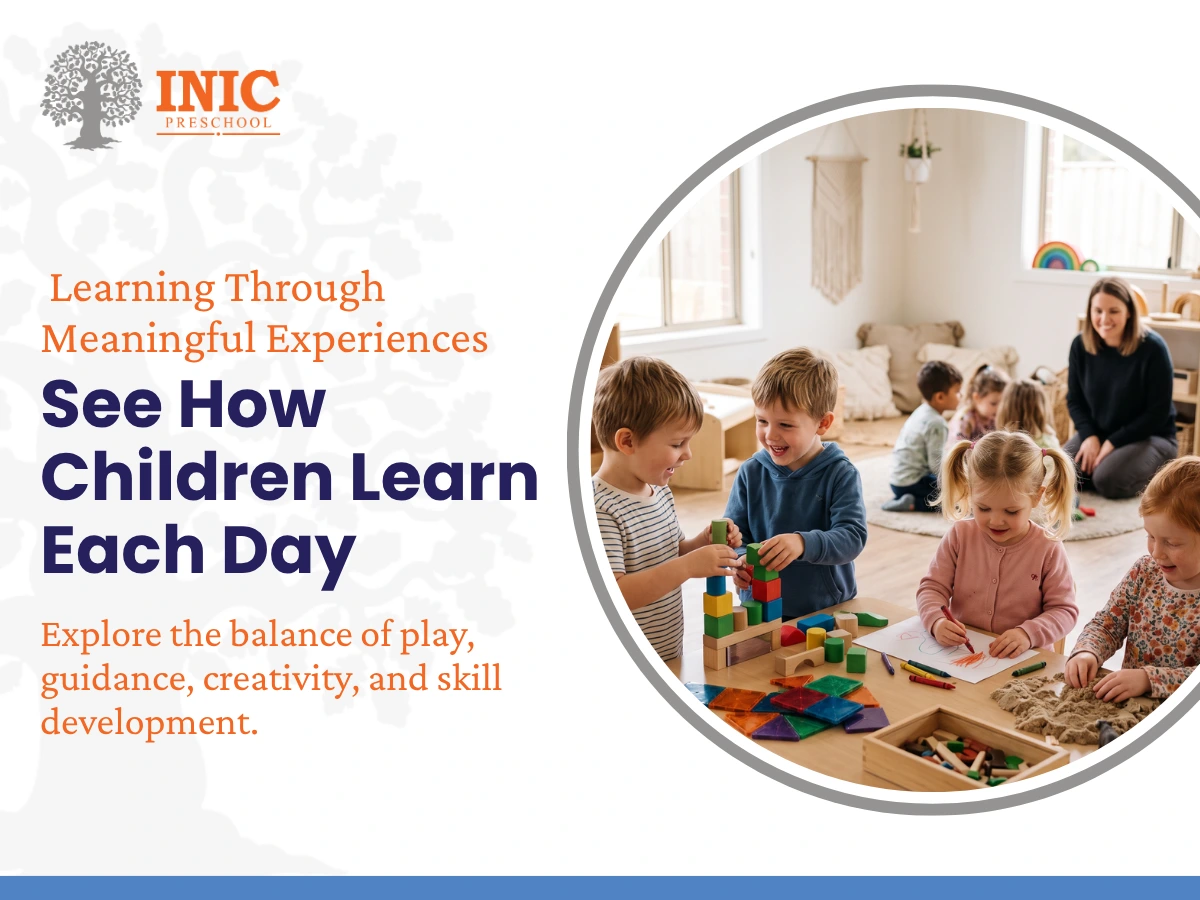
The preschool learning experience should support the development of the whole child. Strong programs help children build early academic skills while also encouraging communication, creativity, physical development, independence, and emotional confidence. Parents should look for evidence that learning is meaningful, age-appropriate, and connected to children’s interests.
Look for a Balance of Play and Guided Learning
Young children learn through active exploration, repetition, observation, and interaction. A high-quality program should offer a thoughtful balance between child-led play and teacher-guided activities.
Children may develop early literacy and math skills through:
- Storytelling and shared reading
- Music, songs, and rhymes
- Sorting, counting, and pattern activities
- Building with blocks and manipulatives
- Art, sensory play, and dramatic play
- Conversations with teachers and classmates
These experiences allow children to practice important skills in ways that feel natural and engaging.
Consider How Teachers Support Individual Development
Children develop at different rates and bring unique interests, strengths, and needs into the classroom. Teachers should observe each child and adapt activities when additional support or challenge is needed.
Parents can ask how educators document progress, plan learning experiences, and communicate developmental observations. The goal should not be to compare children but to recognize growth and provide appropriate guidance.
Review Opportunities for Social and Emotional Growth
Preschool is an important setting for learning how to share, cooperate, express emotions, solve problems, and participate in a group. Teachers should model respectful communication and help children manage conflicts in constructive ways.
A positive learning experience should help children feel secure enough to ask questions, try unfamiliar activities, and recover from mistakes.
Explore Language, Culture, and Creative Expression
Children benefit from environments that expose them to varied language, music, stories, traditions, and forms of expression. Learning materials should reflect diverse families and experiences. Programs may also offer second-language learning, creative arts, movement, or music as part of the regular curriculum, helping children develop broader communication and thinking skills.
Research the Preschool’s Educational Approach
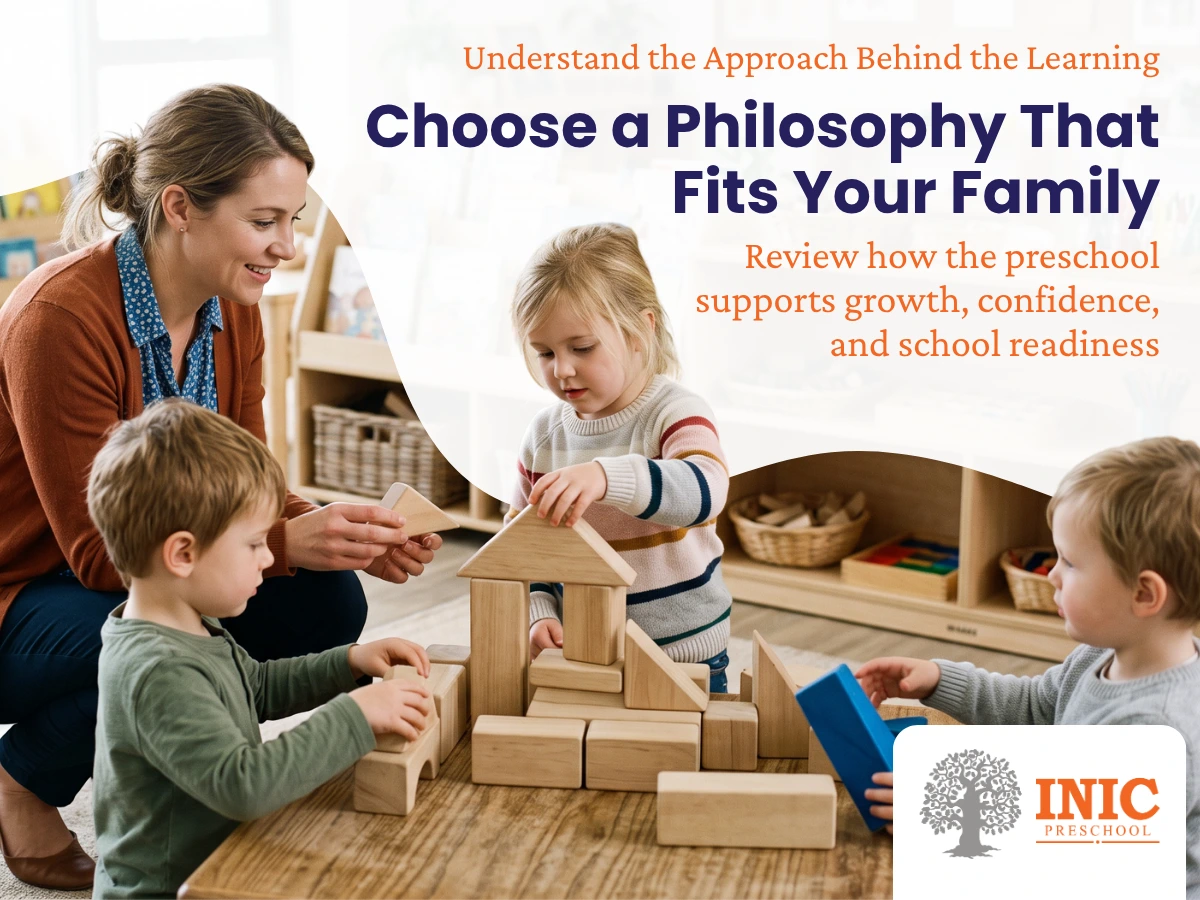
A preschool’s educational approach influences how teachers plan activities, organize classrooms, respond to children, and measure progress. Before scheduling a tour, families should research the school’s philosophy and consider whether it aligns with their expectations for early childhood education.
Review the School’s Mission and Values
A clear mission should explain what the preschool believes about children, learning, and family partnerships. Some schools emphasize play-based exploration, while others may focus on language immersion, project-based learning, school readiness, or a combination of approaches.
Parents should consider whether the school values:
- Respectful and responsive relationships
- Curiosity and independent thinking
- Cultural awareness and inclusion
- Social and emotional development
- Family communication and collaboration
- Preparation for kindergarten and future learning
These values should be visible throughout the school’s website, policies, and classroom practices.
Understand How the Curriculum Is Delivered
The name of a curriculum is less important than how educators use it. Teachers should be able to explain how classroom activities connect to developmental goals and how lessons remain engaging for young children.
Families should look for an approach that supports literacy, math, science, language, physical development, creativity, and social skills without placing inappropriate academic pressure on children.
Consider the Role of the Teacher
In some programs, teachers provide more direct instruction. In others, they act as guides who observe children’s interests and create opportunities for deeper exploration. A strong approach often combines both methods.
Teachers should be intentional, responsive, and prepared to adjust their plans based on the needs of the group. Their interactions should encourage children to think, communicate, experiment, and make choices.
Look for Consistency Between Philosophy and Practice
A preschool’s educational philosophy should be reflected in its classroom materials, daily schedule, teacher training, communication, and behavior guidance practices. Families can use the tour to confirm whether the environment matches the claims made online. Consistency between the school’s stated approach and everyday routines is an important sign of a thoughtful, well-managed program.
Conclusion
Identifying the right preschool begins with understanding what a strong learning environment should provide. Families can make more informed decisions by reviewing the classroom setup, preparing thoughtful questions, considering the daily learning experience, and researching the school’s educational approach. These steps help parents look beyond surface-level details and focus on the factors that support children’s safety, development, confidence, and long-term growth.
Explore INIC Preschool and schedule a tour by calling (512) 435-7868 or visiting https://inic-edu.com/contact-tours/.
Experience the INIC Difference: The Best Spanish immersion Preschool & Daycare
Learn. Play. Make Friends. Founded in 2012, INIC Preschool & Daycare (International Immersion Center) is a Spanish immersion school with locations in Round Rock and South Austin. Educators here are upbeat and enjoy a positive teacher-led work environment with access to many benefits. INIC’s evidence-based curriculum emphasizes social-emotional learning, math, reading, Dynamic Movement, Purposeful Play, and Creative Lab Arts for babies, toddlers, preschool, pre-k 3, and pre-k 4. The classroom experience is intentionally low tech for kids, but parents and grandparents are delighted to check in on their little scholar with high-tech, easy-to-use tools: WatchMeGrow and Brightwheel. All classes and activities are taught in Spanish, every day, as well as Mandarin Chinese. It’s much more than a daycare.
INIC Preschool Round Rock proudly serves families in Pflugerville, North Austin, Cedar Park, Leander, Georgetown, Hutto, Taylor, and Liberty Hill. INIC Preschool South Austin has served these communities since 2012: South Austin, Circle C, Oak Hill, Buda, Kyle, Dripping Springs, Driftwood, Bee Cave Township, Westlake, Onion Creek, Manchaca, and more.
Round Rock area: 2960 Jazz Street, Round Rock, Texas 78664 [email protected]
South Austin: 2100 W. William Cannon Dr., Austin, Texas 78745 [email protected]