

Private School Enrollment Explained: What Parents Should Know Before Applying
The private school enrollment process explained begins with understanding how schools evaluate fit, confirm availability, and guide families through required steps. While timelines vary, most private programs follow a structured path that includes an initial inquiry, a tour or meeting, and application submission for your baby, toddler, preschool, or pre-k student.
Families may also be asked to provide records, complete health and development forms, and secure placement with a deposit once accepted. Knowing what to expect helps you plan, meet deadlines, and avoid last-minute stress. With thorough preparation, you can navigate enrollment with confidence and choose the best setting for your child.
INIC Preschool makes the tour and application process easier:
Tours can be booked online in less than a minute, at a convenient day and time
Private one-on-one tours are focused on your family’s unique needs
If INIC is a good fit for your family, the application can be completed online in three minutes
Additional documents can be provided online at a later date
INIC’s Guaranteed Start Date takes the guesswork out of enrollment
The Enrollment Essentials: Private School Enrollment Requirements
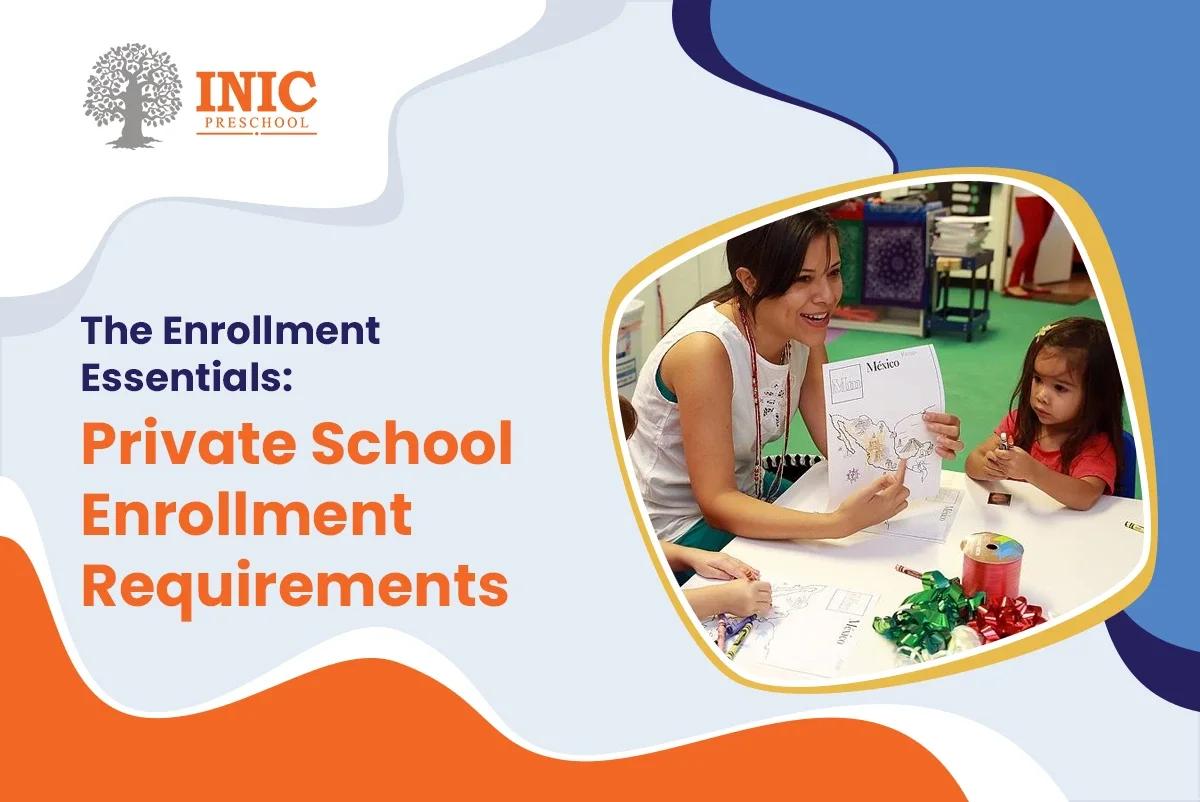
Private school enrollment requirements typically follow a clear set of expectations that help a school confirm eligibility, prepare for a safe start, and ensure families understand policies from day one. While the paperwork requirements vary by program and age group, most private schools request the same core information to ensure a smooth enrollment experience.
Typical Documents And Forms Schools Request
Be prepared to complete an application form and provide basic information about your family and children. Many schools also request:
Child identification details and emergency contacts
Parent or guardian authorization forms
Prior childcare or school history, if applicable
Health & allergy documentation
Age Eligibility, Placement, And Program Availability
Enrollment begins with confirming your child fits the program's age range and placement guidelines. Schools may ask about developmental milestones, daily routines, or classroom readiness to place your child in the best-fit environment. Availability also matters. Some programs fill quickly and may use waitlists, especially for younger age groups or popular schedules.
Health, Immunization, And Emergency Information
Health documentation is an essential part of enrollment. Schools commonly require immunization records or approved exemptions where permitted, as well as a health statement completed by a pediatrician. You may also need to provide:
Allergy information and care plans
Medication authorization forms, if applicable
Emergency medical consent and preferred providers
These requirements help ensure consistent care and quick decision-making if a child becomes ill or needs support during the day.
Tuition Policies, Deposits, And Enrollment Agreements
Financial requirements should be provided in writing and easy to understand. Most private programs require a registration fee and a deposit to secure a space after acceptance. Review the enrollment agreement carefully and confirm details such as:
Tuition schedule and payment methods
Withdrawal policies
Late payment guidelines and re-enrollment expectations
Included services and any additional fees
A helpful practice is to request list of required documents from the school and keep a single folder, digital or printed, for all forms and due dates. When requirements are transparent and organized, enrollment becomes less stressful and more focused on what matters most: choosing a program where your child can learn, feel secure, and thrive.
Timing Matters: How Long Does Private School Enrollment Take
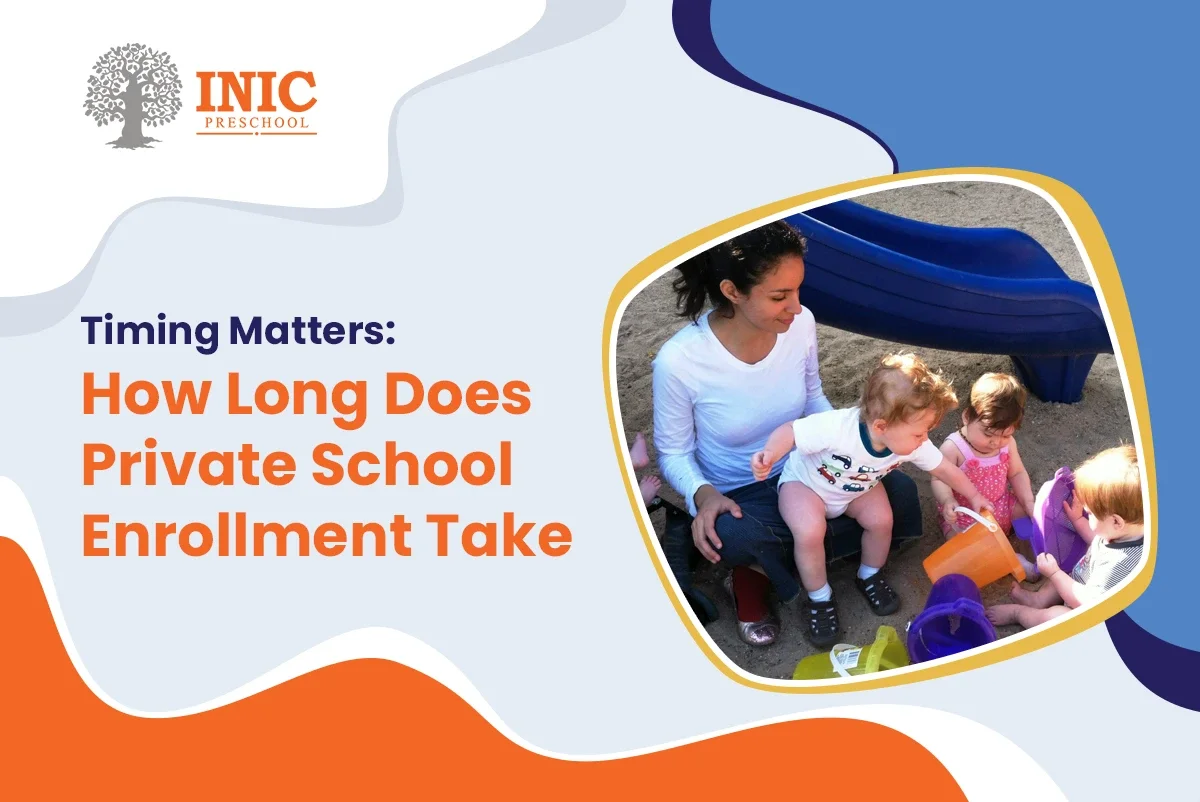
The time it takes to enroll in private school depends on the school's process, the child's age group (such as infant, toddler, preschool, and pre-kindergarten), and how quickly a family can complete each step. Some programs can confirm enrollment within minutes, while others follow a multi-week timeline due to tours, application review, and limited availability. Understanding the typical sequence helps you plan and reduce delays.
Common Private Preschool and Daycare Timelines From Inquiry To Enrollment
Most private schools follow a predictable progression. A general timeline often looks like this:
Initial inquiry to tour scheduling: a few days to two weeks
Tour to application submission: same week to two weeks
Application review and decision: one to three weeks
Enrollment confirmation after acceptance: a few days, once fees and forms are complete
If the school has open seats and your paperwork is ready, the process can move quickly. If a waitlist is involved, timelines extend.
Factors That Can Speed Up Or Delay The Process
Several variables influence timing. Enrollment often moves faster when families have documents prepared and respond promptly to requests. Common causes of delay include incomplete forms, missing health records, or scheduling conflicts for tours and meetings. Availability is another major factor. Infant and toddler programs often fill up earlier than programs for older age groups, and preferred schedules may be limited. Schools may also have specific enrollment windows, especially for fall starts.
Waitlists, Openings, And Mid-Year Enrollment
Waitlists vary widely. Some families may receive an opening within weeks, while others wait longer, depending on turnover and demand. Mid-year enrollment is possible, but depends on classroom capacity and how the school supports transitions. When considering a mid-year start, ask how the program helps children adjust and how they maintain consistency within the classroom routine.
What To Do If You Are On A Tight Timeline
If you need placement quickly, prioritize efficiency without sacrificing fit.
Contact multiple schools the same week to compare availability
Schedule tours back-to-back when possible
Gather immunization records, emergency contacts, and payment information in advance
Ask directly about start dates, fees, and next steps after acceptance
A realistic timeline, paired with organized preparation, makes the enrollment process easier to manage and helps you secure the proper placement with less uncertainty.
From Interest To Acceptance: Steps To Apply For Private School

Applying to a private preschool is typically a structured process designed to confirm fit, review availability, and help families understand expectations before a child begins. When you approach the steps in order, you can reduce stress, avoid delays, and make confident decisions throughout the experience.
Start With Research And A Shortlist
Begin by identifying what matters most to your family, then build a shortlist of schools that align with those priorities. Review each program's age range, educational approach, schedule options, and communication practices. Confirm basic availability early so you do not invest time in programs that are already full.
Schedule A Tour And Prepare Your Questions
A tour is your best opportunity to see daily routines in action and understand how the school supports learning and care. Prepare a short list of questions that help you compare programs fairly, such as classroom ratios, teacher training, health policies, and how progress is shared with families. During the visit, observe the teacher's tone, classroom organization, and how children transition between activities.
Submit The Application And Supporting Materials
Once you are ready to move forward, complete the application and gather the required documentation. Schools often request items such as emergency contacts, health records, and previous childcare information. Submitting everything together can speed up the review and reduce follow-up requests. Some private schools, like INIC Preschool, have an online portal that makes the process faster and easier for families.
Common Items To Prepare
Completed application form
Immunization or health records, and any allergy plans
Emergency contacts and authorized pick-up list
Tuition agreement acknowledgments and required fees
Complete Any Meetings, Assessments, Or Follow-Ups
Some schools schedule a family meeting, classroom observation, or child visit to confirm placement and readiness. This step is not about performance. It helps the school understand your child's needs, learning style, and transition support. Respond promptly to any follow-up questions to keep the process on track.
Review Acceptance Details And Secure Your Child's Spot
After acceptance, confirm next steps in writing. Review the enrollment agreement carefully, including tuition schedules, deposit requirements, start dates, and key policies. Once your deposit and final paperwork are submitted, your child's placement is typically secured.
A clear application plan, organized documents, and timely communication can make the path from interest to acceptance straightforward, allowing you to focus on choosing a school that supports your child's growth and readiness.
Avoidable Enrollment Pitfalls: Where Families Often Get Stuck
Many enrollment challenges are avoidable when families understand where delays and misunderstandings commonly happen. A careful approach can save time, reduce stress, and help you make decisions based on clear information rather than pressure or urgency.
Waiting Too Long To Start The Process
One of the most common pitfalls is starting after preferred classrooms are already full. Some programs fill months in advance, especially for younger age groups or popular schedules. Even if you are not ready to commit, an early inquiry helps you understand timelines, tour availability, and whether a waitlist is likely.
Missing Deadlines Or Submitting Incomplete Paperwork
Enrollment often stalls because forms are missing, signatures are incomplete, or health records are not ready. Schools may pause review until all required items are received. A simple checklist can prevent unnecessary delays. Keep all enrollment documents in one place and confirm whether the school prefers digital submission, printed copies, or both.
Items That Commonly Cause Delays
Immunization records or medical statements
Allergy documentation and care plans
Authorized pick-up forms and emergency contacts
Tuition agreement acknowledgments and payment setup
Choosing Based On Price Alone
Budget matters, but it should be weighed alongside overall value and program fit.
Similar tuition doesn’t mean similar quality — schools can differ substantially in:
Teacher training and experience
Child-to-teacher ratios
Communication practices with families
Meals and snacks provided
Daily schedule and hours (e.g., 7:00 am–6:00 pm vs. 8:30 am–2:30 pm)
Structure and depth of learning
Quality indoor and outdoor play and learning areas
Student day schedules – are kids busy and active all day with transitions or “stuck in one classroom” too much of the day?
Request a clear, itemized breakdown of what tuition includes so you can compare fairly, including:
Registration and enrollment fees
Supply and materials fees
Uniform costs
Enrichment or specialty programs
Late pick-up policies and charges
Overlooking Policies That Affect Daily Life
Families sometimes commit without fully understanding operational policies. This can create frustration after enrollment, especially around illness rules, vacation schedules, drop-off expectations, and communication standards. Request the parent handbook or written policies before accepting, and review anything that will impact daily routines.
Rushing The Decision Without Validating Fit
When a program has limited openings, it is necessary to make a quick decision. Even then, you can validate fit through a focused tour and a short list of questions. Observe classroom tone and transitions, ask how teachers handle behavior guidance, and confirm how progress is tracked and shared. A school that is a strong match will be able to explain its approach clearly and consistently.
Avoiding these pitfalls helps you navigate enrollment with fewer surprises and greater confidence, supporting a smoother start for both you and your child.
Conclusion
The private school enrollment process is easier to manage when you understand the typical requirements, timing, and decision points before you apply. By starting early, preparing documents in advance, and using tours to confirm fit, you can avoid common delays and move forward with clarity. A strong program will clearly communicate expectations, provide transparent policies, and support a smooth transition once your child is accepted.
To learn more about INIC's enrollment and schedule a tour, call (512) 435-7868 or visit https://inic-edu.com/contact-tours.